
India's total online shopper base at 30 per cent of its internet population is low when compared with 78 per cent in China and 70-plus per cent in the US.

WhatsApp on Wednesday said it expects to facilitate the purchase of "affordable sachet-sized" health insurance through its platform by the end of the year as part of its efforts to provide users in India with greater access to financial solutions. The Facebook-owned company noted that its 'Payments' feature is now available to users across the country (currently up to 20 million users) with support from banking partners - State Bank of India, HDFC, ICICI and Axis Bank.

In the backdrop of the crisis brewing at Paytm Payments Bank, major fintech companies are ramping up their workforce and inducting new faces in their leadership teams, industry sources said on Wednesday. Users will not be able to add funds to their Paytm Payments Bank Wallet after February 29, though they will still be able to use the services and the existing balance in the wallets, according to the Reserve Bank of India (RBI) diktat. Industry sources said that competitors to Paytm are investing heavily in offline payments while doubling their salesforce.
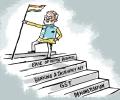
With vehicular activity picking pace in May, toll collection also saw a huge uptick. Fastags posted an impressive jump of more above 400 per cent in transaction count at 55.17 million, and an over-300 per cent jump in value at Rs 1,142 crore.

In 2024, the National Payments Corporation of India (NPCI) approved 20 third-party Unified Payments Interface (UPI) applications, a record since UPI's launch in 2016. This surge reflects growing interest from financial technology (fintech) companies, driven by the integration of credit products like UPI-linked credit cards and pre-approved credit lines.

'With a very stable technology with limited functionalities, a large network has spanned out.'

Finance Minister Nirmala Sitharman on Monday held a performance review meeting with heads of public sector banks and asked them to make concerted efforts to garner deposits. Deposits have been growing 300-400 basis points lower than the credit growth in the last few months, creating an asset-liability mismatch for banks. During deliberations on the deposit mobilisation, she said that while the credit growth has picked up, mobilisation of deposits could further be improved to fund the credit growth sustainably, and asked banks to make concerted efforts to garner deposits by conducting special drives.

'That way you're not hostage just to US sort of exports to India.'

The number of internet users in rural India increased 18 percent last year, faster than growth in urban areas and continuing a trend that started two years ago. Internet users in urban India increased 5 percent in 2021. Rural India has 351 million users, or 37 percent of people there, according to a report by the Internet and Mobile Association of India (IAMAI) and data analytics company KANTAR.

India should not be left behind. It should join the seven central banks which are studying feasibility and safeguards necessary to eliminate risks, particularly from hacking, advises former foreign secretary Shyam Saran.

Employers are now looking to hire professionals who can demonstrate their skills rather than reel off a catalogue of undirected theoretical qualifications.

Technology is rapidly reshaping industries that have long been rooted in tradition, driving a wave of innovation that is transforming everything from finance, banking, steel to manufacturing.

The finance ministry expects a broad-based moderation in inflationary pressures on the back of an anticipated reduction in food prices as a result of the uptick in summer sowing. The retail inflation rate remained stubbornly clung to the 5 per cent mark in seven of the past eight months. "Core inflation is trending downwards, indicating a broad-based moderation in price pressures... Driven by strong domestic growth and benign global commodity prices, core inflation is declining continuously.

In the first such collaboration for India, the country's flagship payments platform, the Unified Payments Interface (UPI), and Singapore's PayNow payment system have launched a real-time cross-border payment linkage system. The linkage, which was launched by Prime Minister (PM) Narendra Modi and Singapore's PM Lee Hsien Loong on Tuesday, was kicked off by a live cross-border transaction between Reserve Bank of India Governor Shaktikanta Das and Monetary Authority of Singapore managing director Ravi Menon, using mobile phones.

The Reserve Bank of India on Friday permitted banks to increase charges on ATM cash withdrawals beyond the mandatory free monthly usage by Rs 2 to Rs 23 per transaction from May 1.

By the end of December 2021, India had 389 million users who did not have access to mobile Internet, while there were 765.8 million mobile Internet users in the country.
The Reserve Bank of India (RBI) will launch the Unified Lending Interface (ULI) nationwide in due course, aiming to transform India's lending sector, similar to how the Unified Payments Interface (UPI) revolutionised the payments ecosystem, Governor Shaktikanta Das said on Monday.

Call centres, once the engine room of India's BPO exports, are evolving too. Depending on the complexity, 30 to 50 per cent of voice and chat volumes are now handled by conversational AI.

'This helps the consumers secure more favourable terms from CIs.'

The IPPB, which is currently running pilot services in Raipur and Ranchi, needs a go-ahead from RBI for the software used for system integration
The country's largest private lender HDFC Bank is planning to facilitate a shift in its payments module from the existing core banking platform. This would ensure minimal payments downtime, even if core banking is not available. "This 15-month project will be followed by hollowing the customer-master modules from its existing core systems. "It will ensure a single system of record for customers across various products," said Sashidhar Jagdishan, managing director (MD) & chief executive officer (CEO), in the annual report for 2021-22.

The private corporate sector showed improvements across various segments in the third quarter of the current financial year (Q3FY25), with the operating profit margin of listed non-financial companies increasing sequentially by 50 basis points (bps) to 16.2 per cent, according to the Reserve Bank of India (RBI) data released on Monday. Sales of listed private non-financial companies increased by 8.0 per cent during Q3FY25, compared to 5.5 per cent in the corresponding quarter a year ago. It was, however, 5.4 per cent in Q2FY25.

Indian startups raised a total of $1.65 billion (about Rs 14,418 crore) in funding at a median valuation of $83.2 million in February 2025, according to data from Traxcn. This brings the total funding in FY25 (April-February) to $25.4 billion, spread across 2,200 rounds, the data showed.
The RBI on Friday asked Paytm Payments Bank to stop opening new accounts amid "material supervisory concerns" observed in the bank. "Reserve Bank of India has today, in exercise of its powers, inter alia, under section 35A of the Banking Regulation Act, 1949, directed Paytm Payments Bank Ltd to stop, with immediate effect, onboarding of new customers," the central bank said in a statement. The bank has also been directed to appoint an IT audit firm to conduct a comprehensive system audit of its IT system.

Almost all banks that issue contactless cards provide users with a 100 per cent liability cover.

Rapid strides in digital payments notwithstanding, the Indian economy will likely remain cash-dependent for many years to come, at least that's what the automated teller machine makers and cash logistics companies are betting on. After growing at over 20 per cent for most of 2020, currency in circulation growth fell to 8.5 per cent as of October 29 this year, shows data from the Reserve Bank of India (RBI). The reason for the steep rise in currency last year was the uncertainties related to the Coronavirus (Covid-19) pandemic, where people preferred to hoard cash to meet exigencies.
With the banking regulator lifting restrictions on HDFC Bank's digital initiatives, the largest private sector lender is now girding up to launch a clutch of customer-facing applications (apps), which will act as stepping stones in its journey to morph into a technology (tech)-led bank from a conventional one. Following repeated outages in its digital offerings, the Reserve Bank of India (RBI) had barred HDFC Bank from issuing new credit cards in December 2020 and prevented it from going ahead with its digital launches. The embargo on issuing credit cards was lifted in August 2021 and the ban on digital launches was lifted last week.

The Reserve Bank on Tuesday directed digital lending entities to disclose upfront the names of of their empanelled agents authorised to contact borrowers in case of default of loan, and also intimate the details to customers before initiating the recovery process. In August last year, the RBI had tightened norms for digital lending to prevent charging of exorbitant interest rates by certain entities and also check unethical loan recovery practices. Under the new norms, all loan disbursals and repayments are required to be executed only between the bank accounts of borrower and the regulated entities (like banks and NBFCs) without any pass-through/ pool account of the Lending Service Providers (LSPs).
The Reserve Bank of India (RBI) has recognised the Fintech Association for Consumer Empowerment (FACE) as a self-regulatory organisation (SRO) in the fintech sector, the central bank announced on Wednesday. The banking regulator received three applications for fintech SRO. Of the remaining two applications, one has been returned by the RBI with a provision for resubmission after meeting specific requirements, while the third application is still under examination, said Governor Shaktikanta Das at the Global Fintech Fest in Mumbai.

Ask rediffGURU and PF and MF expert Janak Patel your mutual fund and personal finance-related questions.

With rising disposable incomes in cities beyond metros, the penetration of credit cards - and consequently, credit card spending - is growing at a much faster pace than in traditional metro cities, primarily driven by e-commerce spending.

The size of the Indian financial services market could touch around $340 billion in the next few years.


Bharti Airtel on Wednesday announced a new corporate structure to sharpen the company's focus on rapidly unfolding digital opportunities while enabling it to unlock value. The move comes at a time when digital is turning out to be a compelling proposition for players in the Indian market, where the use of smartphones and better broadband connectivity has spurred the adoption of a new range of services. Players are positioning themselves beyond the core telephony offerings, as they enhance digital engagement, build future streams of revenue and create brand differentiation, besides redefining themselves as a larger platform of digital services, say market watchers.

Mutual funds aspirants have the option of snapping up smaller AMCs or applying for a new licence.

Fintech firm BharatPe is targeting an initial public offering (IPO) in the next 18-24 months with the company expecting profitability at an earnings before interest, taxes, depreciation and ammotisation (Ebitda) level for FY25, chief executive officer (CEO) Nalin Negi said.

Are we running a cricket match using football rules, asks Ajit Balakrishnan.

In a recent clarification, the Central Board of Indirect Taxes and Customs (CBIC) provided insights into the goods and services tax (GST) treatment of transactions involving vouchers. According to the CBIC, vouchers can be categorised into two types.
In a bid to ensure security of card data, the Reserve Bank of India (RBI) has enhanced the scope of tokenisation and permitted card issuers to act as token service providers (TSP). Under tokenisation services, a unique alternate code is generated to facilitate transactions through cards. The RBI on Tuesday extended the device-based tokenisation to card-on-file tokenisation (CoFT) services, a move that will bar the merchants from storing actual card data. Card-on-file refers to card information stored by payment gateway and merchants to process future transactions.

India has moved up in rankings from ninth to the fourth spot this year in the tally of top 20 countries affected by spam calls, owing to a significant increase in sales and telemarketing calls, as per a report by Truecaller. This year, all categories of sales-related calls made up a vast majority (93.5 per cent) of all incoming spam calls. Interestingly, over 202 million spam calls were made by just one spammer in India this year between January to October - which is over 6.64 lakh calls every day and 27,000 calls every hour of every day.
